Stop Optimizing Your Life
Your happiness depends on it.

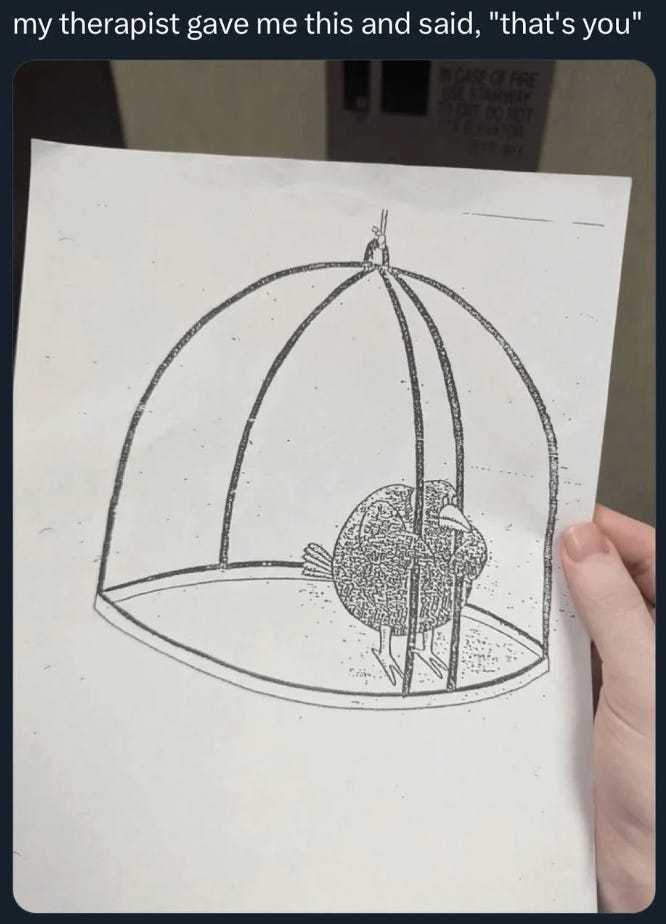
I was drifting off on a well-earned nap after taking the agent of chaos hell bent on my destruction — my child, I think it’s a phase — to school this morning, and as I did a thought washed over me. I thought to myself, this ability to nap, to regain some energy before starting out on a day that would have been less productive had I pushed through, is something I flat out couldn’t have done ten years ago. Why is that? Why isn’t rest seen as a vital part of productivity?
After all, in the years since becoming self-employed, I’ve also had to coach myself out of adhering to a corporate work schedule, gradually understanding that without unstructured brain-rest time, I make bad work. I start to try to optimize my output, squeezing more videos out of one idea, planning way ahead in a way that kills my natural impulsivity, and creating a regimented, soul-grinding workflow that is the reason I couldn’t hack it in the corporate world to begin with.
Did you catch that word? It’s the one all of this hinges on: Optimize. Somewhere in between downloading AOL when I was nine and now holding an all-knowing doom box in my hand, my generation haplessly agreed to join the optimization revolution. I didn’t capitalize it because I don’t think it’s officially a Thing™️, but it’s not like it was a secret either. Friend of the channel Gwyneth Paltrow1 opens her 2020 Netflix documentary series Goop Lab with a mission statement for her company, culminating in the “optimization of self,” an assertion that gave me the heebies even then, and I imagine it won’t age super well.
In the twelve years I lived in Austin after graduating college in 2009, I was surrounded on all sides by the urge to optimize. Google was churning through overworked, contract-paid employees at the rate of the Industrial Revolution because so many fresh college grads were eager to be a part of the smooth, efficient future. Juice bar chains exploded, selling giant jugs of watermelon juice and “Master Cleanse” to get rid of those rotten toxins impeding your goals. Black Swan Yoga, previously a local chain, was acquired by a company called Onnit, who had their own branded coaches and workouts with weird mace-like objects and boasted “Total Human Optimization” in huge block letters on the wall of the studio. The tech world became obsessed with a substance called Soylent, a gray beverage2 that promised all your nutrition in one step, doing away with the pesky distraction of eating actual food.
In 2026, the children yearn for the mines. By that I mean that Zoomers and younger seem to be reaching for something they haven’t experienced yet, a kind of analog living they were born too late for, and thus romanticize. I can’t blame them. The fantastic messiness of my college years could never have existed in a world of 4K smartphone cameras and a hunger for online virality. We slopped around in our strange clothing, dancing to amazing music knowing we could untag anything unflattering on Facebook the next morning. The worst case scenario was our friends seeing it before we did.
While we all joke openly about the looming threat of AI becoming self-aware and taking over the world, the real enemy is already in our homes, in our hands, in our heads. Optimization is the enemy of happiness. I say this not to ignite fear or guilt, but actually to point out that we have control over it. We feel pretty powerless to the abstract doom all around us, but naming the enemy is the first step in defeating it.
That might feel like an overstatement, that optimization and happiness are moral opposites. It felt airtight while I was dipping off for that nap earlier. But let me riff here:
First of all, there’s an emptiness to our menial tasks. Even writing something in my notes app feels hollow against the tactile response of a pen on paper. A lot of us are forced to sit at a desk all day, and are now being encouraged (forced at gunpoint) to use AI to “optimize” something repetitive like replying to an email. Sure, it’s faster, but why? No one is actually spending eight hours a day at a desk in front of a computer, working. It’s not possible. Humans need more than that3. We know this because the mind is constantly trying to do something else, go outside, drift off in thought, talk to a friend, shop, eat, watch a funny video, get lost in a book. Our bodies aren’t trying to sabotage us. They’re telling us what we need.
And the guilt of deviating is overwhelming. This is work. Work is supposed to suck. But our minds crave presence. That’s where the flow states are. That’s where the satisfaction lives. Optimization creates a false urgency predicated on completion of boring tasks as quickly as possible to get to some endpoint of “free time,” but when we get there the quiet makes us uncomfortable, restless and guilty. This is what I mean when I say it’s in our heads. Prisoners and guards. We’ve got the keys right there in our hand.
Secondly, I’d like to draw your attention to the last time you felt genuinely curious. I read somewhere that time seems to move faster as we age because we’re not encountering new things very often, whereas kids are bombarded with newness all day every day by virtue of being new on earth. And while I wouldn’t want everything to come as quite as much of a surprise as it did when I was a child, I would argue that it’s my responsibility now as an adult to seek out things I’m curious about, to create my own newness and slow time down on purpose.
But the breakneck acceleration of optimization technology (and the persistent drum beat of the patriarchy4) has convinced us that we’re above certain things, better than the mundane demands of everyday life. A machine could do that. That false empowerment has caused us to think we should skip past the mundane and focus on total productivity…like machines. I won’t venture too far into the ass backwards way the tech world is trying to optimize everything to the point that AI chooses our meals, but I think the point I’m driving at here is that happiness in our current day is just on the other side of de-optimizing our lives. All we have to do is reject the notion that this was a good idea in the first place.
Does that mean walk out of your job? Maybe. No, it doesn’t mean that. But you can change your mindset right the fuck now. Try this thought exercise: Imagine you have an idea to start a company. You get it up and running, and things are really going well. But you start to realize that there are more jobs than you have time for, and you’re better at some things than others. You hire someone to do the stuff you’re spread too thin for, and you’re able to pay them. Your company grows. You hire more people. Rinse and repeat. Your job is just someone’s idea that got too big to do it themselves so they realized they could pay you as little as humanly possible to do it for them. Ditto for all the people you work with.
Again, this doesn’t mean walk out. It means see it for what it is. This is all fake. It’s all something someone thought of and then did it. “Someone” decided work was eight hours of suckage (it was actually because things sucked worse then, and eight hours was a matter of establishing a baseline of human dignity…ironic). “Someone” (someone evil) decided your email is on your phone now. “Someone” decided that goofing off, resting or being bored was the opposite of productivity (it isn’t). This is all some human’s idea. You’re a human. You get to have ideas, too.
A friend of mine got a landline phone installed in her apartment and turned on call forwarding from her cell phone to her landline. She then stored her phone in another room and ignored it. For her it was a means of rewiring her relationship with the device, but it’s brilliant on a lot of levels. In changing the way she had access to her phone, she in turn trained people in her life to think differently about her time. We’re not meant to be available all the time. If someone gets mad they can’t reach you for a few hours, so what? Chances are they were looking for a reason to be mad anyway; you did them a favor.
Optimization is also what has allowed us to worry more about a sociopolitical issue on the other side of the world — that likely affects no one we know or will ever know — than we do about the issues right in front of us that we can actually have an effect on. The overwhelm of information and its access to us has convinced us that there is morality in being a concerned citizen, so we must therefore miserymaxx our brains on behalf of every person suffering anywhere on earth at any given time. And optimization is happy to provide you infinite misery on tap.
A few times I’ve referred to “being present” as the goal. I want to elaborate on that because it’s the cheat code to everything, but it requires mental discipline and a genuine sense of curiosity on the matter. Multitudes of great minds have created road maps to earthly enlightenment for anyone wanting access to it, but the meat in the middle is this: Being able to, at any moment, step back from your human emotions, the current situation, and your physical body, and become an observer to those emotions, the situation, to your physical self, allows you to notice everything about the present moment. It has the power to instantly ground you. Ram Dass describes it beautifully, I think: “You take the melodrama, and you turn it into a mellow drama.”
I love putting it that way because he encourages us to find humor in it all. When you step back and see your life as the goofy, insane and inexplicable thing that it actually is, you can’t help but laugh. What if we’re microorganisms in one drop of water in a world of a much larger life form? They dripped a little on the counter, and it’s spreading quickly in their time while they grab a towel to clean it up, but in our time it is the infinite and eternal expansion of our universe. That’s funny.
A quote crossed my feed awhile back that makes me cry every time I read it:
“i like to pretend i already died and asked god to send me back to earth so i can swim in lakes again and see mountains and get my heart broken and love my friends and cry so hard in the bathroom and go grocery shopping 1,000 more times. and that i promised i would never forget the miracle of being here”
We aren’t supposed to be waiting and preparing to live our lives. We aren’t supposed to be adhering to insane 4am morning routines or desperately trying to live forever. The reason it all feels like it’s slipping away is because many of us aren’t on the ride at all. You don’t have to travel to every country or go cliff jumping to engage fully with a life well lived. You don’t really have to leave your mark anywhere. This is all one big silly dance. Stop letting anyone else convince you that you’re doing it wrong.
I’m kidding.
I suppose anything is a beverage if someone chooses to drink it.
Some people do love their jobs. Please, continue loving your job. Don’t let me stop you.
Hating the Patriarchy is not one and the same with hating men. Don’t get me wrong I think some men need to be in prison as a matter of principle. But my argument is that no one benefits from patriarchy. Men are squished into a masculinity box and rewarded for repressing their emotions, while the rest of us are inherently weaker by comparison, and treated as such in every way possible. Patriarchy might reward its apparent proponents with power and money, but trust and believe, they are the unhappiest people in the world. Patriarchy benefits no one.
I lost 10 pounds in the week after I left my last job. It’s not about my weight or the numbers on the scale - it’s about how my stress hormones had been telling me something was wrong and was guarding my body against it. This was a stressful finance job where we had to work crazy hours for the sake of optics. I didn’t feel like a person. While I look for something less demanding (even if it pays less) I’m socializing for the first time in ten years. People are nicer than I remember.
Thank you for so succinctly and eloquently writing down the thoughts that run through my brain on a regular basis. You are a brilliant writer!