We're Doing Trends Wrong
The constant creep of homogeneity and our choice in the matter.

It has recently come to my attention that Mara Hoffman subscribes to my Substack. No big deal, just a person I’ve looked up to as a creative since I started scraping together money to afford her clothes (on deep discount) over a decade ago. This is absolutely normal and not a big deal at all.
Back in college my friends and I used to drive out past the outskirts of Tallahassee and trespass through someone’s vast acreage to swim at a gorgeous handful of sinkholes. It wasn’t uncommon to see girls my age who attended the (sadly defunct) Florida State fashion school fitted out in brands they could only afford through student debt or rich parents, and one such girl was at the sinkhole that day wearing the most beautiful swimsuit I had ever seen. I asked her where it was from, and she said, “Mara Hoffman.”
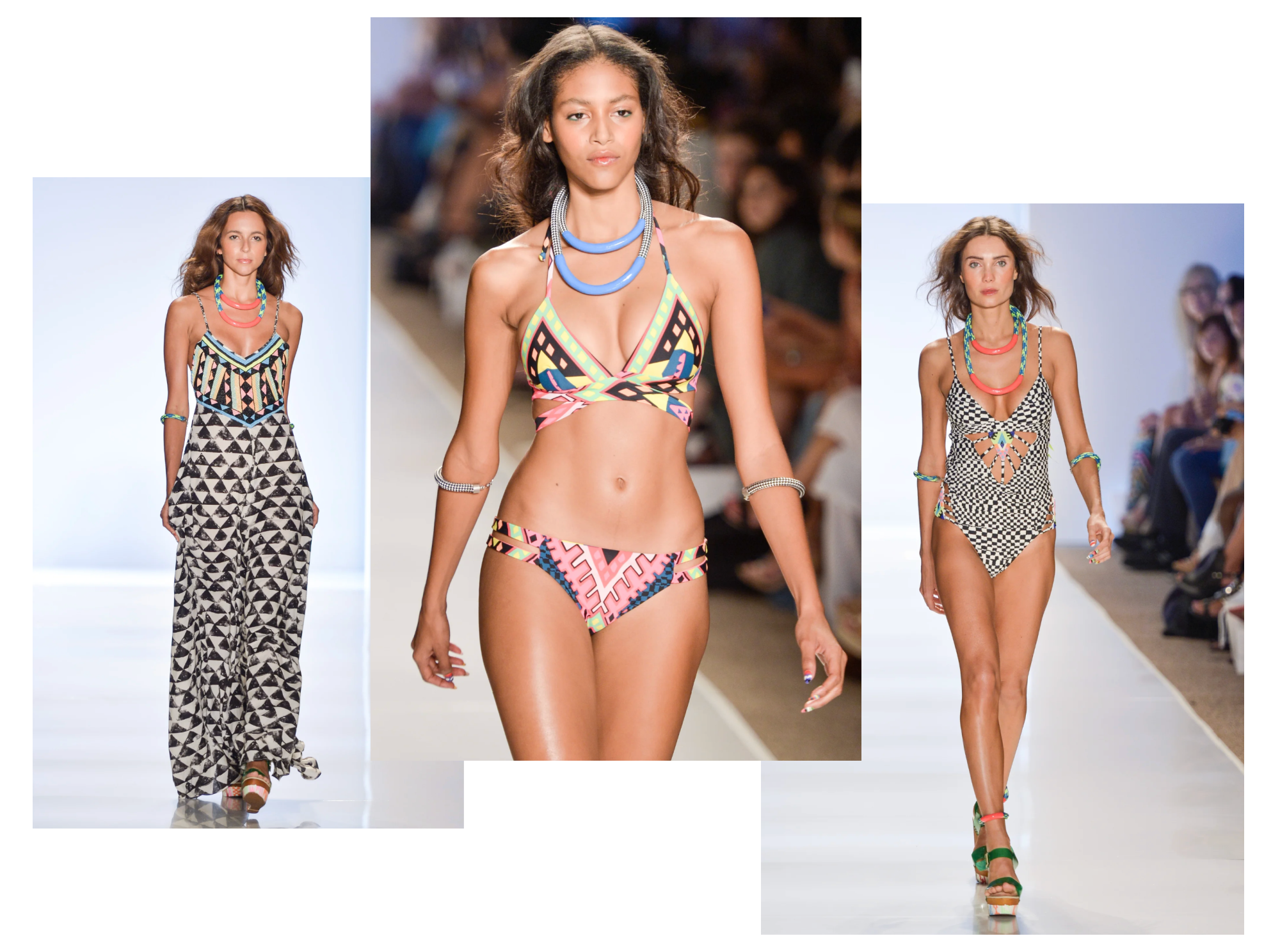
Thus began my love for her unusual patterns that appealed to my hipster sensibilities, but it would be years before I owned my first piece. In my mid-20s I accumulated a swimsuit, some bamboo patterned pants and a geometrically printed silk button-down. My heart broke when she discontinued her bridal line. I watched every runway with rapt interest.
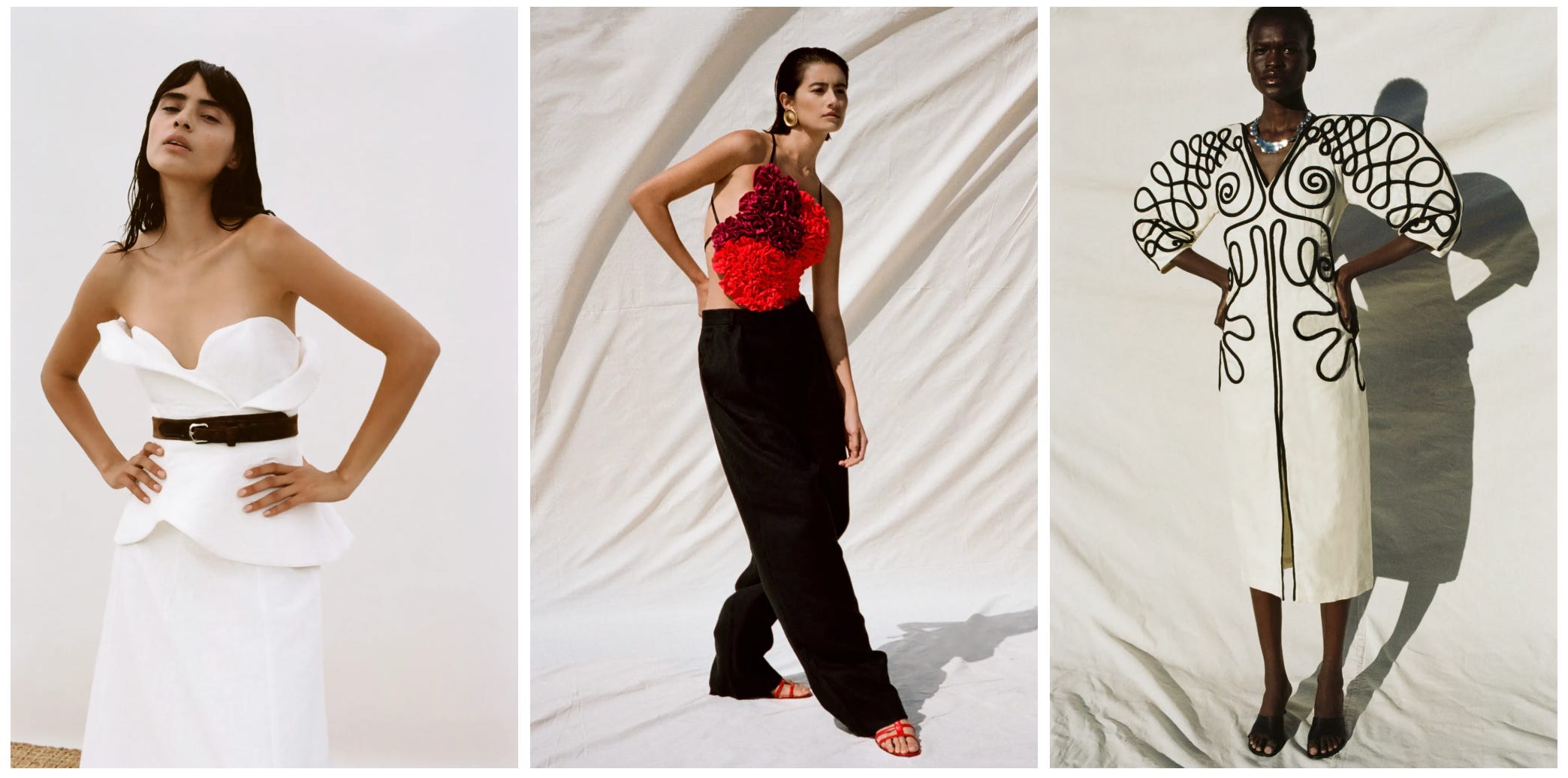
Then something changed. Over time, Mara’s brand moved from a high-end trendsetting mindset to one focused on sustainability and timelessness. Materials and construction improved. Her textiles were simpler and made of natural fibers instead of synthetics. Gone were the days of seeing the seams on my very expensive pants tug tiny holes in their nylon fibers. The next items I bought — a stunning a-line skirt, a denim coat, a pair of tailored gold trousers — were immaculately constructed, and I still wear them all to to this day.
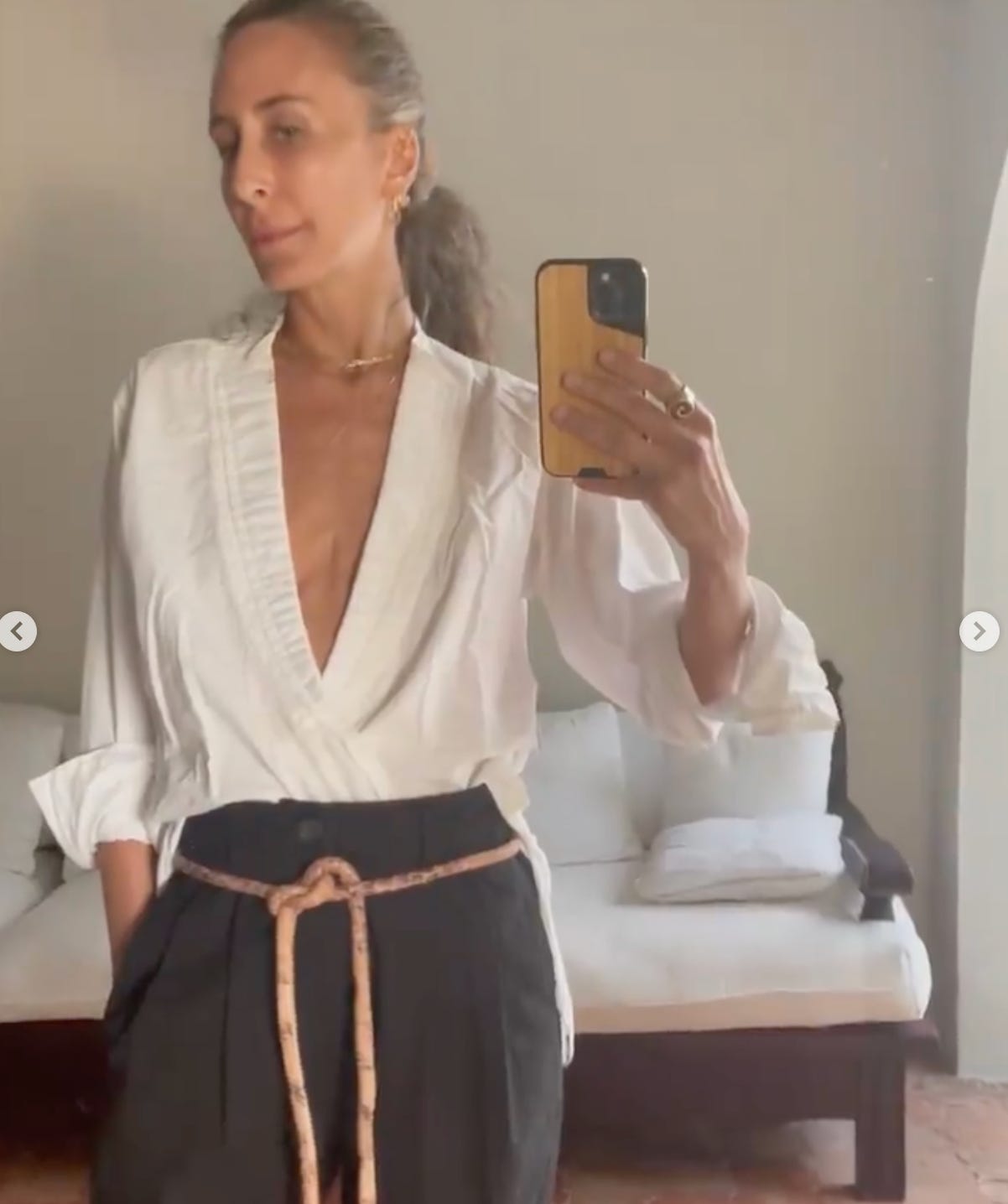
This was the first time I started to really take interest in Mara Hoffman the person, not just her label. As she began to speak up about sustainability in the fashion industry (which we now know is the one of the most polluting industries on earth), I noticed that the human on the other side of the brand was compelling in a way that I couldn’t really place. When she would show behind-the-scenes photos from her fashion shoots, I was far more interested in how she had styled her own outfits than the models’ looks. It was a mix of masculine and feminine, effortless and composed. The proportions were unusual but eminently flattering. She wore her own designs, sized up and cinched or flowing to show her bare chest (as a flat-chested woman myself I immediately took inspiration), and she had incredible jewelry and accessories from designer-friends and vintage finds alike.
I had felt this before, this feeling of wanting to know more about someone aesthetically, but not really knowing why. Did I want to look like Mara? Maybe, a little. Like I said, I borrowed from her styling because we have similar builds. But it was more than that, and especially noticeable because I couldn’t buy how she looked, not even if I owned every item she designed or owned.
Let me repeat that: No matter how much I would have tried, I knew I couldn’t buy how she looked in her clothes. Why, though? I mean she’s a fashion designer. She was (past tense, as she closed her namesake label a couple of years ago) literally creating a world to buy into, but it would never make me look like that. It’s because what I was looking at wasn’t just personal style; I was looking at someone who was completely self-possessed, someone who embodied herself so entirely that she radiated a calm confidence.
I didn’t want to look like Mara; I wanted to embody myself as authentically as she embodies herself.
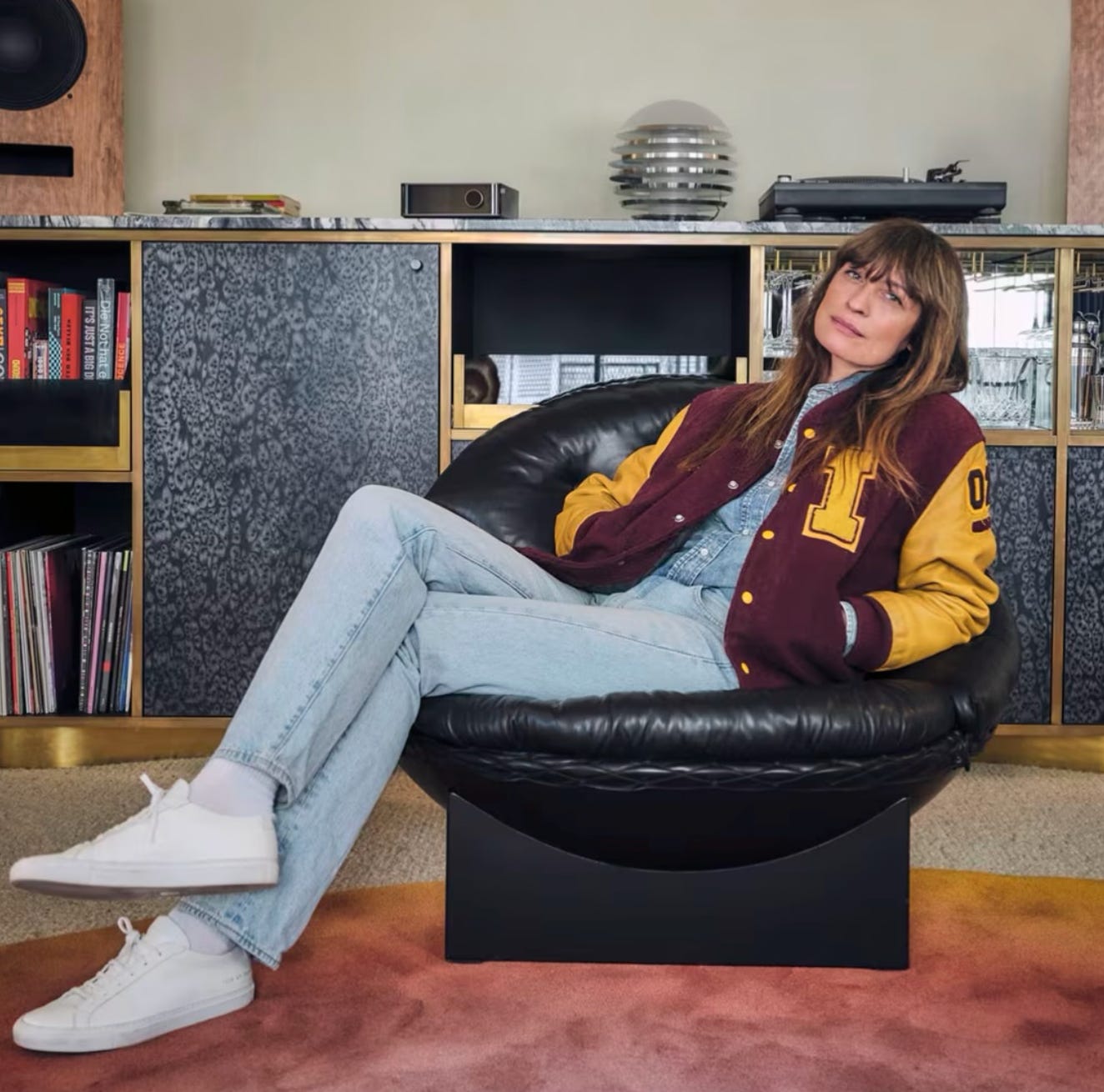
This marked a pretty strong pivot in my own personal style. I found I was attracted to the aura of other creative people for the same reason. Caroline de Maigret was on Lisa Eldridge’s YouTube channel years ago, and while the straight bangs she inspired me to cut on myself didn’t work at all, I took a lot of inspiration from videos of her touring her own wardrobe. Things collected and kept for decades. A passion for certain materials and shapes that made her choose to collect more of that thing, not strive for some abstract notion of wardrobe “diversity.” Above all, how she felt seemed to be what mattered, and it really resonated with me.
So what is the science of it? It’s often called a je ne sais quois. Society loves to marvel at the mystery of a muse, an “it girl,” and leave it at that, an alluring mystery. I actually do believe there’s a science to it, but it’s not about keeping up with the runways, nor is it about dressing like your favorite muse. In fact, I believe we’ve strayed farther than ever from achieving the essence of this phenomenon. Instead, we’ve tried to optimize it, resulting in trends.
I emphasize the word “trends” because it means something different than it did when I was in my teens and 20s. The chronically online audience taking personal style cues from popularity of a product or the aesthetic du jour have redefined a trend as something created by a brand and disseminated top-down, not an “observable pattern” as the word trend was originally intended. Rather than reacting to emergent aesthetic cues, we now reverse-engineer trends in order to answer them with a product.
I know, trends have always existed in this capacity to some extent. Celebrities have been paid by brands to make their clothes look cool for ages. It’s aspirational, and it works. And while the way the trend cycles differ now, both in their means of attack and also their sheer ephemerality is something that is sometimes hard to describe, I would argue you know it when you see it.
I don’t mean to talk down to folks who grew up being forced to transmit and receive most social messaging via the Information Superhighway. It’s the language they know. But never has it been more evident that it’s failing this generation, and that they’re desperately seeking something more fulfilling.
Take for example, the trend of about four years ago where fashion creators on TikTok demonstrated the impact of “styling your clothes versus wearing them.” The format was deliberate and repeatable, as all good TikTok trends are. A creator stood on one half of the frame wearing the outfit, untucked, un-accessorized, un-styled. In the other half of the frame the creator would tuck, roll, layer and add all the necessary accoutrements an outfit needed to look “right.” And to our eyes at the time, the side-by-side contrast made a clear point: there was a right and wrong way to look, and these creators were here to help steer you in the right direction1.
I would never say that any of these creators was acting in bad faith. It wasn’t their intention to homogenize fashion. But the “rightness” of these outfits in the context of homogeneity elsewhere on social media (the “Instagram face” for example) was convincing, and it’s no wonder that a lot of young girls took the formula as a roadmap to feeling good about themselves.
We now know that perfection and homogeneity always encounter equal and opposite retaliation. In the case of flattening our definition of “aesthetically pleasing” to be comprised of a socially-approved outfit and a filtered face, those same consumers who had hoped to find personal style in someone else’s content found themselves fatigued, broke, and feeling like it was all actually pretty…impersonal.
The pendulum has begun to swing back toward a more “unique” way of composing one’s own look day-to-day, away from noticeable fillers and filters and dressing for the approval of an abstract focus group of critical peers. However, what is ever present is the lens these attempts at bucking trends is seen through: even an anti-trend is a trend. To unplug and be luxuriously offline has to be telegraphed online in order to be meaningful. Fast fashion hauls are out and minimalism is in, but it still requires that you buy the right things in order to belong to it2.

No more glaringly does this phenomenon mock us than in the recent sensation on Hulu, Ryan Murphy’s Love Story, a dramatic reenactment of J.F.K. Jr. absolutely overdrafting his only God-given brain cell trying to woo a manipulative woman who cannot stop leaning on furniture, touching her own hair and biting her own lips. Then they tragically die in a plane crash, I’m told.
The writing is so clunky Alex and I found ourselves repeating everything people said except just saying “exposition exposition exposition” in a mimicking tone. Alex noted that a man is only eating a sandwich in a scene when the script is so painfully boring they have to give the viewer something to care about. And we had to pause to laugh hysterically at the part of the first episode (the only one we’ve made it through so far) where our male protagonist is dressing in the gym locker room and the costume department saw fit to imply his virility by shoving a large Hass avocado in his underpants.
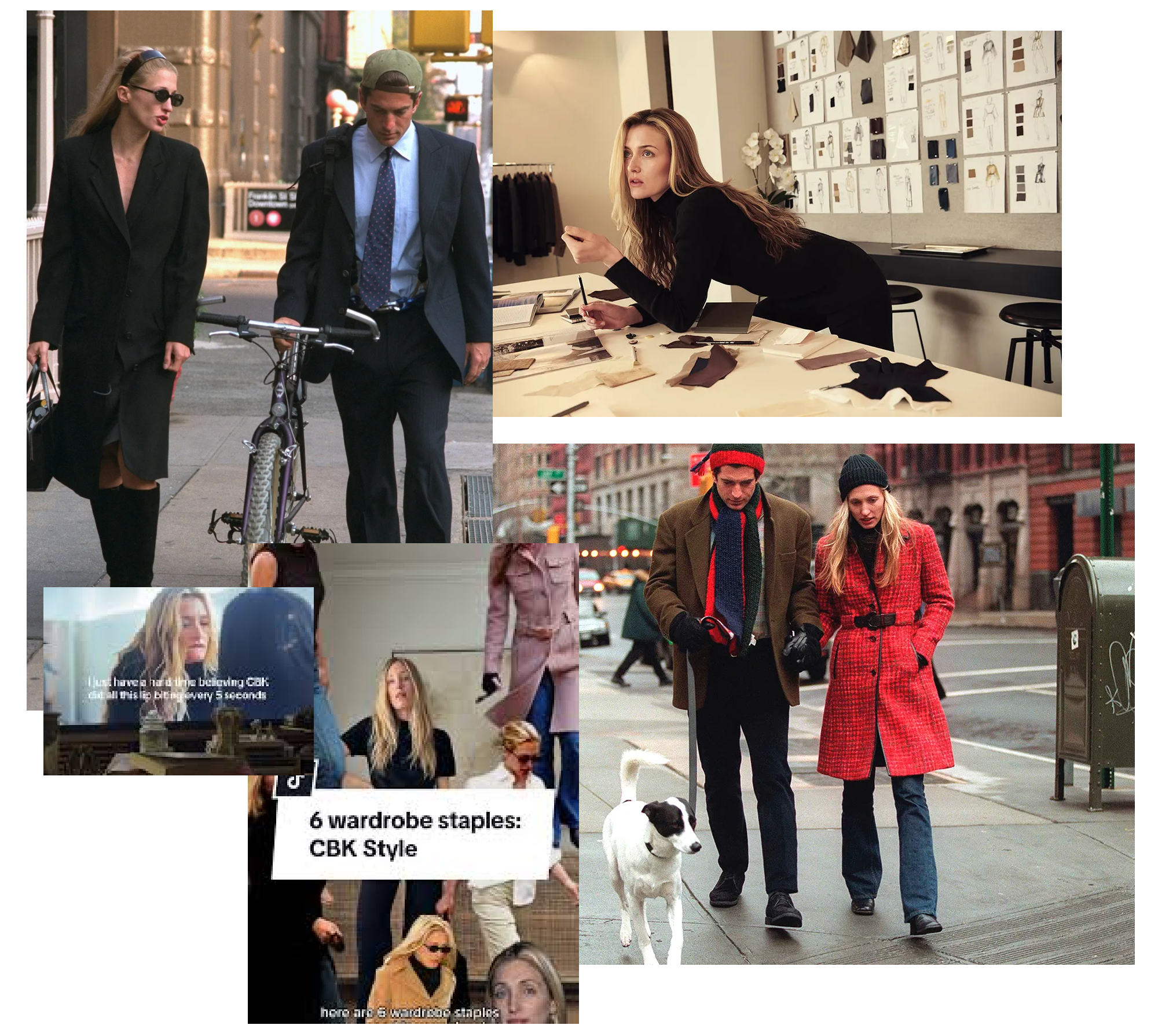
In spite of its lack of self-awareness, the series has inspired a massive wave of Carolyn Bessette Kennedy lookalikes on social media. Selfie-style short-form content feverishly documents NYC 20-somethings as they flock to buy “CBK” coded merchandise, like her horrendously uncomfortable plastic headband and garden variety canvas L.L. Bean tote. Carolyn Bessette might not be the final boss of the ouroboros that is viral fashion trends, but her deceased-ness really allows these young women to reduce her style in a way that can be bought and sold as an aesthetic, robbing her of nuance even more than her portrayal in the show already does.
I feel two ways about this. One, I do think you have to crawl before you walk. We all stumbled through copying things we liked on other people before landing on our own tastes by virtue of simple trial and error. It’s unfair to fault people just because they’re choosing to share their process online. But the other is that this was a layup and we missed the point. We are finally getting a resurgence of 90s minimalist fashion, and instead of researching 90s runways we’re letting Ryan Murphy tell us what one woman wore in an effort to be uninteresting to the paparazzi she so despised. It’s watered down male-gaze story telling, and it’s resulting in the commodification of a woman who was undoubtedly more fashionable (and more interesting) than a muse tugging at her Calvin Klein sweater while smoking a cigarette.
This is the part where I make my case for doing it the hard way, for taking real interest in your own personal style. I advocate for this not just because it’s some of the most rewarding work you can do for yourself — it’s also a great way to unplug from influence and save a lot of money. Here are my tips for approaching personal style in a world where trends are assaulting us from all sides:
You’re in control. It’s not your job to look good in the clothes, and if a trend doesn’t suit you, your body isn’t wrong. The trend is wrong for you and would likely make you feel bad in your skin if you forced it. Taking ownership of your relationship with what you like, buy, and wear builds a strong foundation of instinct that will help you define your own style more and more with time, reverberating confidence in every area of your life.
Disliking things is arguably more important than liking them. I heard a clip recently from a younger TikTok creator who was speaking specifically to her chronically online peers. I’ll paraphrase, but she said something like, “The thing people don’t realize is that in order to develop your own taste, you have to dislike things.” I feel like this would make my generation’s face twist with confusion3 the way my mom’s does when I say I’m working on relaxing and having hobbies: Basically, “duh?” But when I see it through the lens of the virtually inescapable drum beat of breakneck trend cycles online, not only does this kind of content not give a viewer time to decide how they feel before the wheel turns again, it is also pretty ambivalent to any individual’s feelings on it. Your dissenting sentiments are, by definition, not going to trend, and if you’ve been conditioned to believe that your decisions need to be validated by your peers in order to matter, going your own way feels pretty counterintuitive.
The goal is to embody you. We’ve all experienced the feeling of seeing someone and coveting their style. And there’s nothing wrong with borrowing from someone you admire. But we also know what it looks like when two people are wearing the same outfit and only one of them is carrying it off. We know what it feels like to wear something ourselves that feels “off.” And the answer emerges when we follow that logic back to the source: Somewhere at the beginning of the game of telephone that is fashion influence and inspiration, is patient zero. Patient zero is the one who isn’t following anyone. Instead they are inspired to be themselves, and whether they like something is the only feedback loop they need. The reason people look to those types of people for inspiration isn’t just because of the clothes they choose, but also for the intangibles of radiating confidence, uniqueness, sex appeal, coolness, X-factor — they are in some way self-possessed. And while those who exist down the telephone line of inspiration are getting tips on where to buy some great looking clothes, being the one who is leading instead of following is the difference between being the legendary “it girl” and merely cosplaying her.
We love to hate the words “personal brand” as a sign of the times, something we’re all supposed to be developing in order for people to understand and categorize us more efficiently, but humans have always been creating personal brands. You unfortunately can’t opt out of being perceived, and if you don’t take an active role in defining yourself, other people are going to do it for you.
If keeping up with the latest wave of popular style online is what makes you happy, who am I to yuck your yum? But I find “keeping up” with anything to be exhausting, especially something that moves as fast as do the trends of late. When I think of the people whose style inspires me, it often has less to do with what they’re wearing, and more to do with their style as one part of the beauty they create in the world. Taking a strong interest in your personal style is neither frivolous nor narcissistic. It’s a way to make meaning in your own world instead of letting the world assign meaning to you. And once you start you’ll find it’s just another path that, like all the best ones do, leads you right back to yourself.
In a hilariously literal turn of events, fashion creators are now making “styling your clothes versus wearing them” content that aims to decenter the “rightness” of an outfit by doing it “wrong” on purpose. It’s a self-aware parody of itself that does a great job at exemplifying the cynical humor of this generation that admittedly often goes over my head.
To be fair, all we can see is what people choose to put online, so we can’t know about the emergence of individuality offline in any age group. It gives me hope that a lot of the younger set are just opting out altogether and living in the real world.
Gen-X and Millennials alike are haters by nature.
I’m part of a little known and always overlooked generation called Gen Jones which falls in the dip between Boomers and Gen X.
I didn’t grow up online and I can’t even begin to imagine what that does to a young woman’s sense of self.
I’m a retired fashion designer. We just feel what is coming for the next year or so. I’ve always called it Astral Design Committee because most designers are on the same page with where we’re going.
It really is important to own things you love and not what others tell you to wear. I doubt you will ever find a basic white blouse in my wardrobe or a suit of any kind. They just don’t work for me. Classic to me means what consistently works for me.
There is an upside to fast fashion and constant trends. They are so easy to ignore. Most people don’t follow fashion that closely. I’m not saying to be dressing in boring clothes at all. Just find quality things that you really like in fabrics, shapes, and colors that flatter you. Still follow the overall trends, just be true to yourself first.
Ph.D. in aesthetics me: Excellent work, grasshopper.
ADHD me: Damn, that was a fun hyper-focus. Bonus for the “Justice Sensitivity.”
Copy editor me:
Em dashes, innumerated lists, bold font, … you have neuro-spicy punctuation infatuation.